It may surprise people who know me to learn that when I, an anxious preschooler, was told that the time had come for me to attend kindergarten, I decided to vocalize my fears as thus:
“But what if some of the kids speak a different language?”
I don’t think I really had any kind of linguaphobia, I was just making up a reason why kindergarten was out. And it turned out that at least two, maybe three of the kids in my class (it was a very small town) did speak different languages, at least at home. But they spoke English with me and we got on fine.
But the reason this seems such a funny idea now is because since I was not that much bigger than a kindergartener, learning, listening to, and thinking about languages has been more or less my favorite thing.
I chose my undergraduate university primarily because of the range of language courses listed in the catalogue of its Department of Modern Languages and Linguistics, from Arabic to Zulu. I’m not a “superpolyglot,” a term that I think is reserved for people who can speak ten tongues, but I can get by in a lot of languages for an American.
German has never been one of them, however. German boosters often like to point out that English is a Germanic language, and it is true that they share an ancestor. But this doesn’t help as much as you think it does, as syntax, other grammar, and even most of the vocabulary have diverged dramatically over the millennia. Not much more than a quarter of modern English words come from Germanic roots; our corpus is nearly as French as it is German. And our case-free, non-gendered, reliably subject-verb-object grammar doesn’t look much like German at all.
When I’m trying to pick up words and phrases in a new language, I fish for cognates to hang on to. Ideally, English cognates. But I’ll make do with Romance or Slavic or Greek roots, too—I’ve had formal instruction in ten languages, and studied many more casually—surely I know some word this word sounds like.
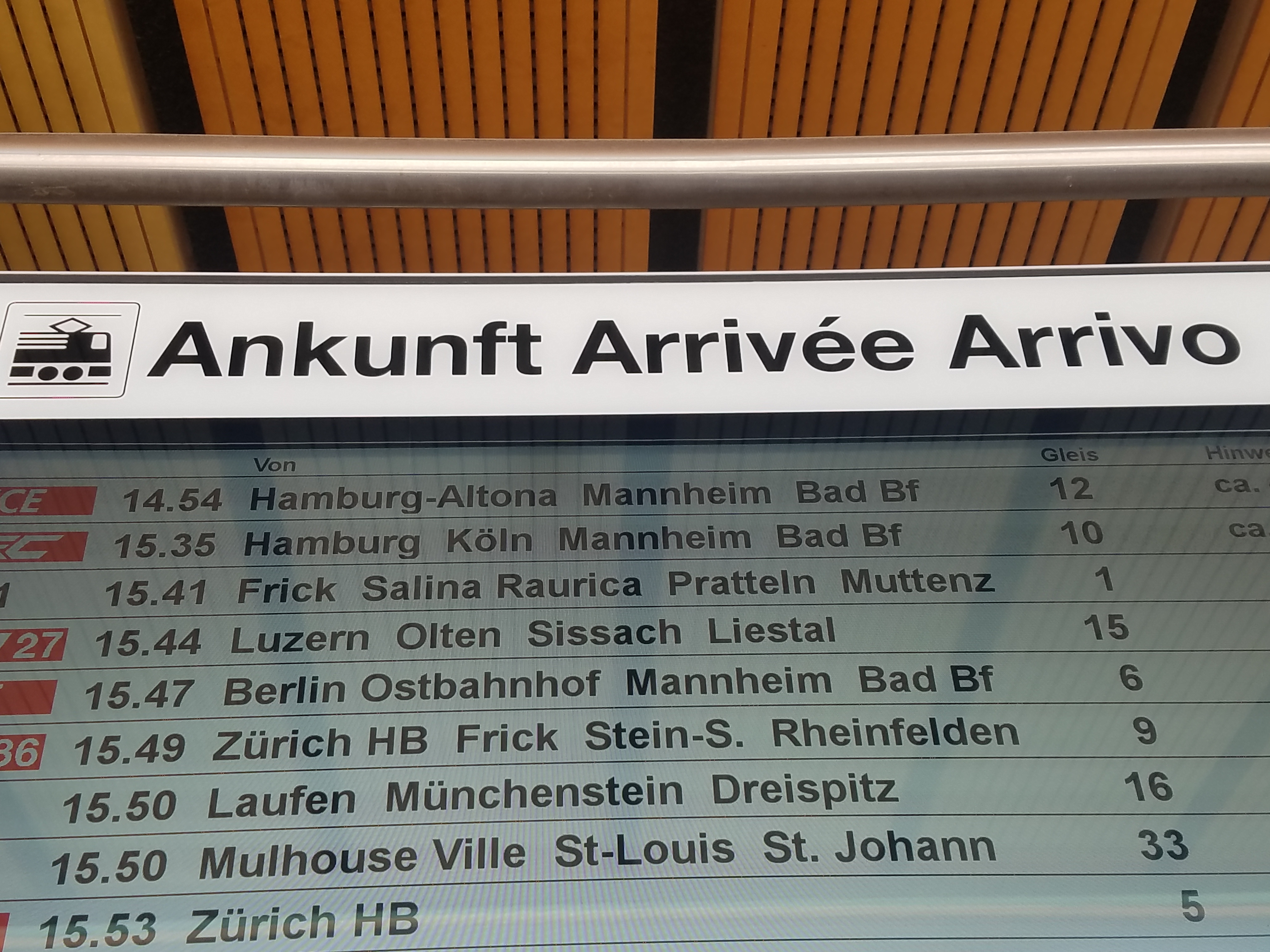
Sometimes it works really well in German: Gut. Mein. Hand. Problem. Seite. Goldfisch. Universität. Waschmaschine. And many, many more.
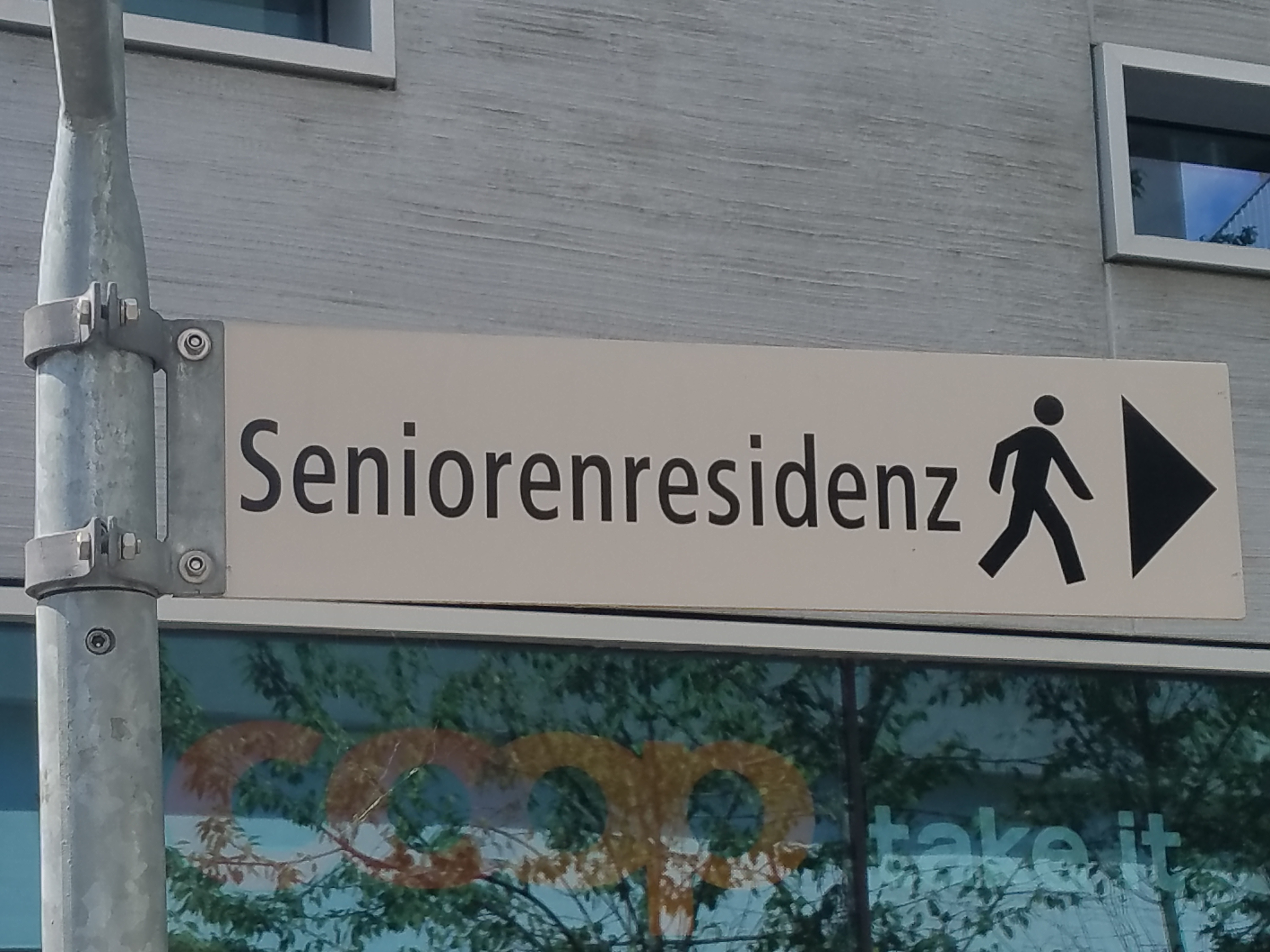
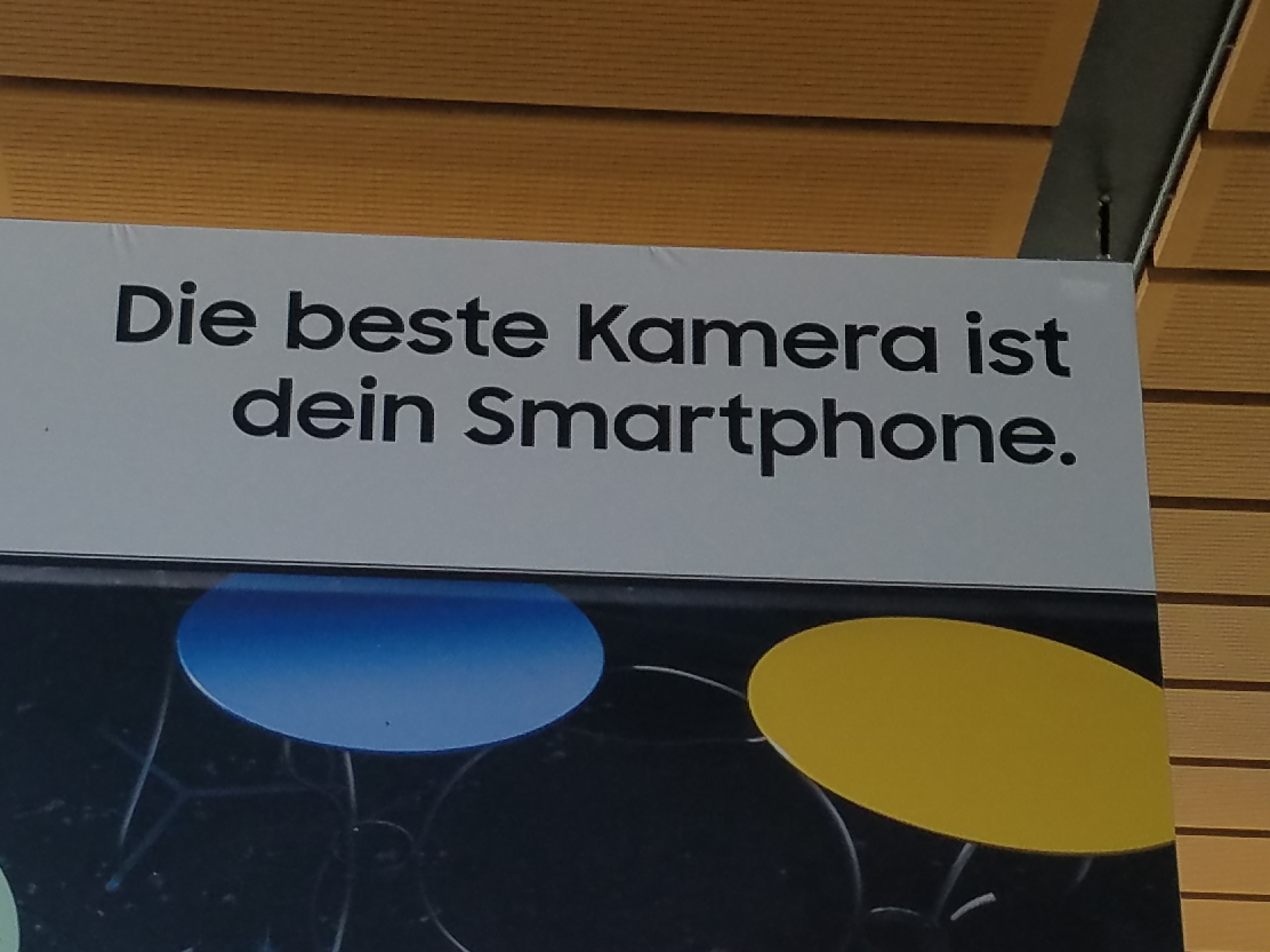
Sometimes it works not at all: I was looking for a notary; turns out that’s an easy-to-remember Notar or Notariat. Then I called one, and found out that a Swiss Notar is actually a species of lawyer more concerned with the production of legally-certified documents than the witnessing of signatures (which is what I was looking for).
I wanted signature authentication, which is obviously Unterschriftbeglaubigung, dummy.
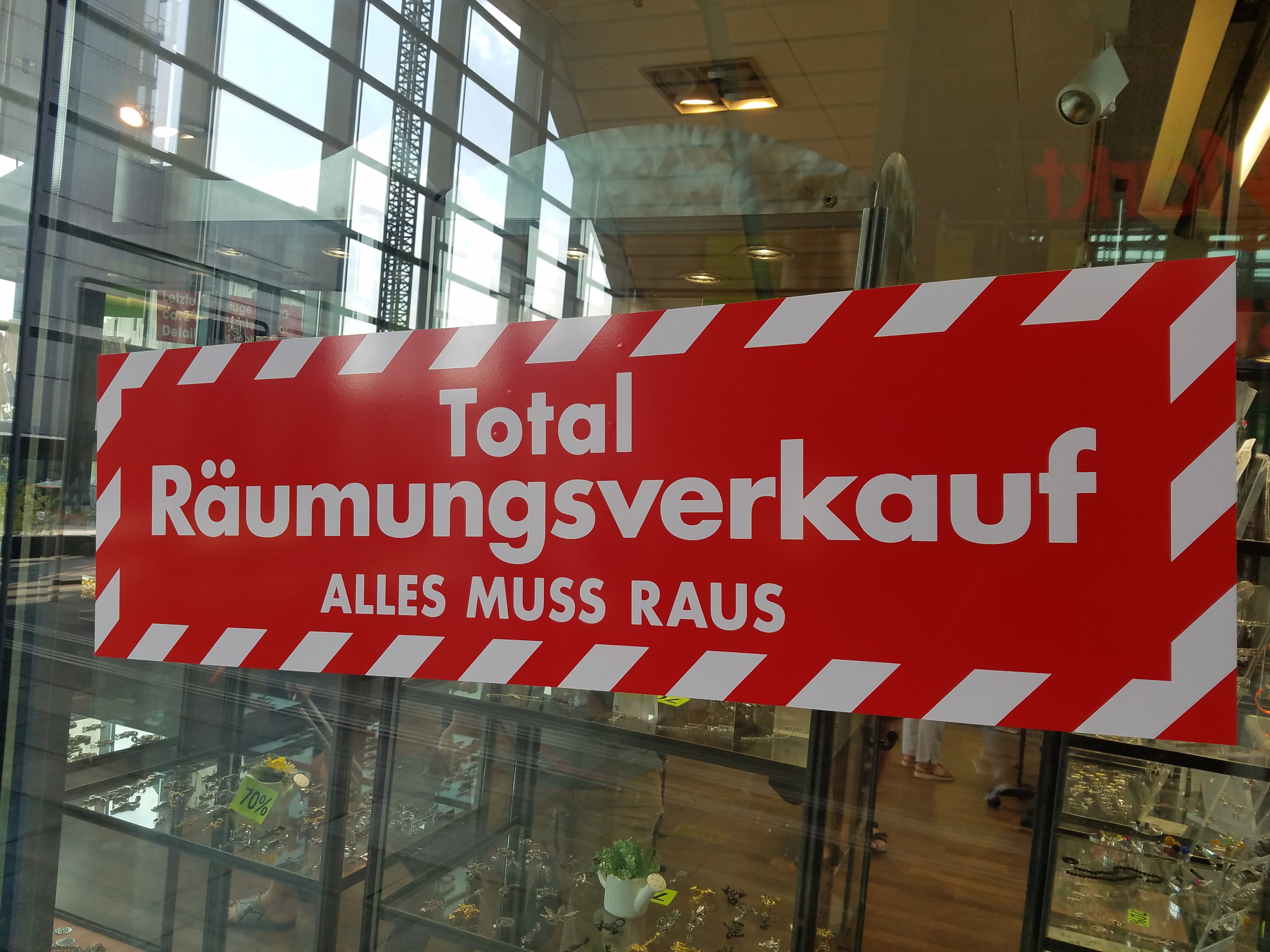
Sometimes it works at first, then goes off the rails: The scene is the pet supply store next door to my apartment.
“Umm… meine Katze hat ein Problem mit Haarballen.”
Nice girl behind the counter gestures immediately to the corner where the hairball medicine is. I get it and pay. But then I get cocky and try to thank her in Swiss German (which is not to be confused with German, and about which I will write much more by and by).
One of the endearing features of Swiss German, along with the fact that most nouns are usually rendered as diminutives (a house is not a Haus, it’s a Hüsli; a mouse is not a Maus, it’s a Mäusli; a rabbit isn’t a Hase, it’s a Häsli; that dude from Basel is not a Basler, he’s a Beppi, etc.) is that it’s loaded with French, of which I can understand a lot. In local argot, “farewell” is often adjö (adieu). And at least as far as I can overhear, “thank you” is often mässi (merci). So I tried it.
Me: Mässi!
Her, brain kicking into gear to remember the French she had to pass in high school but clearly has not used since: “Oh, ah… merci, monsieur! Bon journée!”
So I’m pretty sure I’m known at that pet store as “That dim-witted French guy with the cats.” But I can live with that.
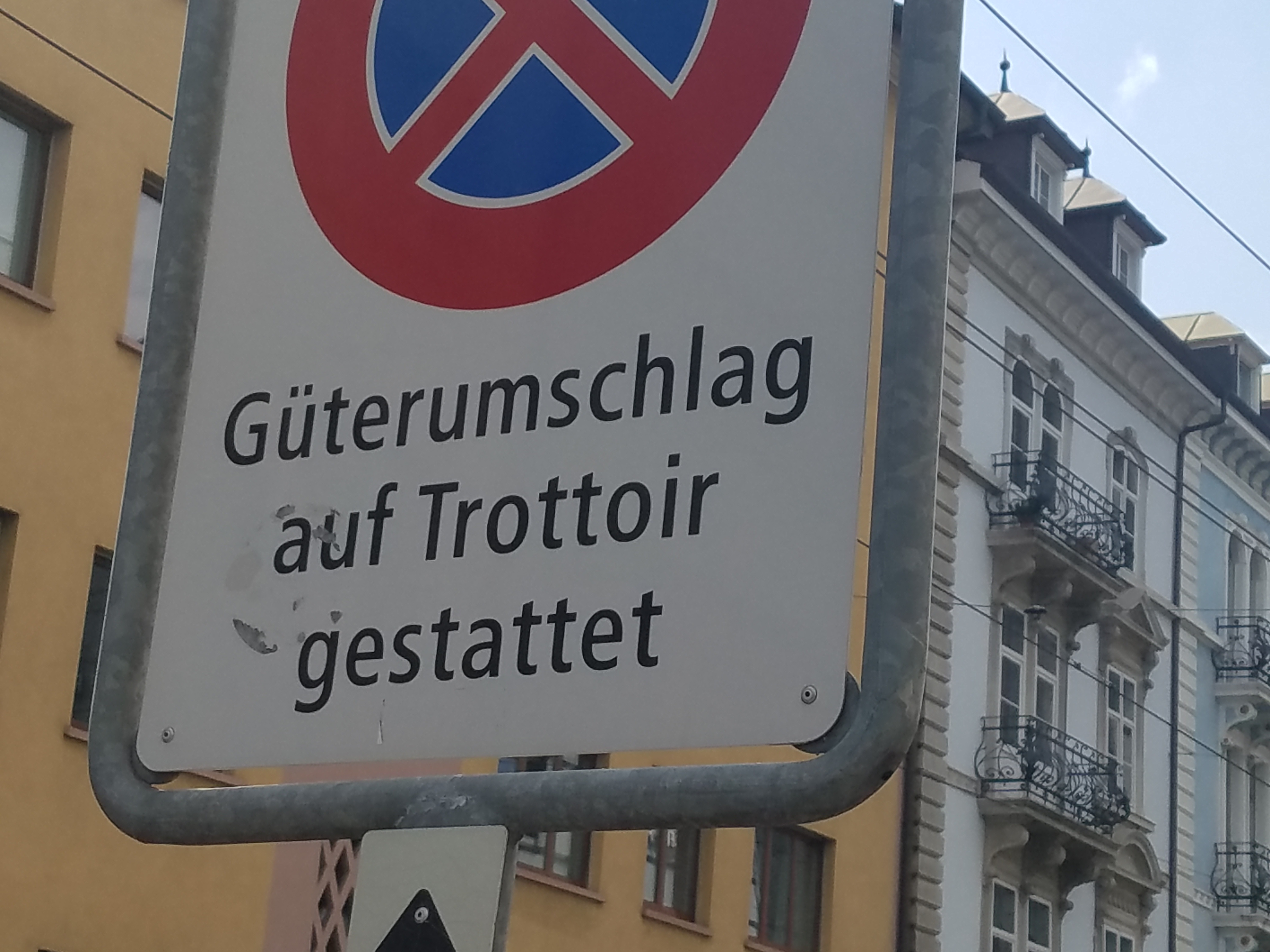
Even Swiss Hochdeutsch (High German, the stuff people around here are schooled in but do not generally speak in the streets) is Frenchy—when I buy a chicken salad, which I have done several times both because I enjoy eating them and because I can say it, I buy a Salat Poulet, with the chicken part pronounced like French with a little German accent.
(I have yet to see or order a potato casserole, although I enjoy saying Kartoffelauflauf to myself, and Kartoffel [potato] is easy for me to remember because it was borrowed into Russian, although the Russians usually use the diminutive kartoshka. But of course, the Swiss would call potatoes Herdöpfeln [earth apples], an Alemannicization of pommes de terre.)
Switzerland is famous for being an officially multilingual country—German, French, Italian, and plucky little Romansh (among many other local spellings—for a code with fewer than 50,000 first-language speakers it has an impressive diversity of at least seven living dialects, and the official pan-valley standardized form, invented in the 1980s and building on around a century of earlier unsuccessful language engineering attempts, has been met mostly with resentment) are all printed on the money, and all enjoy legal status in various parts of the Confederation.
When I signed up for my supermarket loyalty card (and no, I’m not going to get started on grocery shopping again), I had the choice of requesting communications in German, Italian, or French. I chose Italian, as it’s the easiest for me to read; I can fake a little French, too, as implied above, but I can actually speak some Italian, rather than just trying to speak a guttural portuñol through my nose.
But Swiss federalism makes this official polyglossia a little less convenient than you might think. Languages are only official for government use within the cantons where they have been designated as such. So a Romansh speaker outside of Canton Grison (aka Graubünden), the only region where the language is legally sanctioned, can’t expect to walk into a government office and receive service in his or her mother tongue.
In our home canton of Basel-Stadt, Switzerland’s smallest, German is the only official language. So that’s the only language you can expect the government to communicate with you in, and vice versa.
We’ve met native French speakers who’ve been refused permission to fill out German forms in French, even though French enjoys pretty nationwide visibility, appearing alongside German (and sometimes Italian too, albeit less often) on most labels and packaging, and some public signs. Announcements on our local trams are in German only, but switch into French when we arrive at the train station where the French trains stop (they speak English, too, but only at the stop for the massive convention center). And when you talk to a local government official (so far we’ve interacted just with the foreigner processing teams at the Bevölkerungsdienste und Migration unit of the Justiz- und Sicherheitsdepartement des Kantons Basel-Stadt—doesn’t it sound welcoming?), it’s safe to expect her to sigh and switch into English with you, but she would clearly rather not.
Letters from the sanitation department explaining trash pickup days and locations of recycling centers seem oddly threatening, cheerful stickers with the pig mascot of the sanitation department notwithstanding. One of Jessica’s colleagues received an ominous-looking official missive, brought it to the administrative team at her office with some concern—is it a traffic ticket? Did I break the law? Am I in trouble?—and was met with peals of laughter.
“Did you put recyclable tonic water bottles in your trash bag?”
Such is the daily life of non-German speakers in Basel.
Beneath local officialdom’s German monomania, and federal multilingualism, Basel is an extremely, delightfully multilingual place. People have moved here from throughout Switzerland’s speech communities, and from places all over the world. It’s not the most foreigner-heavy town in Switzerland (this award goes, evidently, to some small Zürich suburbs that are majority-immigrant), but something in the neighborhood of a third of Basel residents are foreign-born.
Most of Switzerland’s resident aliens (more than 80%) are from other parts of Europe—French, Germans, Italians, and Portuguese together make up half of the foreign population nationwide. Jessica, who is like me a beginning student of German, although she had the advantage of a semester in college twenty years ago, has been able to get her nails done in French by a stylist from Alsace. During my first few weeks in Basel I found opportunities to use Italian just about every day, beginning on day two, when my jet-lagged brain, too tired to remember any of my previous weeks of very casual German self-study, noticed that my supermarket cashier had an Italian surname on her nametag and was speaking to the man in front of me in italiano.
My French is fake—it would be dishonest to claim that I can really speak it—but I understand it moderately well, and it has been a relief more than once when someone who speaks kein Englisch has offered Französisch as an alternative.
Basel is also home to some thousands of English-speaking expats working in the large pharmaceutical and chemical industries, and an interesting diversity of people from other parts of the world. When I visited Basel for the first time back in March, one of the things that made me feel most comfortable with the idea of moving here was observing polyethnic groups of local schoolchildren, phenotypically of European, African, and South Asian descent, shooting the breeze with one another in Schwiizertüütsch on the trams and in the squares. Some of the people I’ve spoken Italian with have been Albanians.
The neighborhood to which we are most likely to move in the next few weeks, known as Clara, is agreeably diverse. It’s home to a sizeable Turkish population (our prospective new apartment is above a kebap, pide, and low-end pizza shop), a large community of Indian descent (we will be just a few minutes’ walk from Switzerland’s flagship Indian grocery store, the headquarters of a little local chain, and I could not be happier), many old-school Portuguese and Italian eateries, a lot of Thai restaurants, and at least one Thai karaoke place—I hope they have one of the four or five Thai oldies I can sing accurately.
Surprisingly, it’s also a center for Basel’s Brazilian and Dominican communities, which I didn’t know existed before I came here but have since seen evidence of all over the place. The Indian grocer has a selection of Dominican and Brazilian imports, and I hear much more Latin American Spanish and Portuguese around than I was expecting to.
We hired a cleaner a few weeks ago (for those still looking for German cognates, that’s obviously typically a Putzfrau); it took a long time for the service to find anybody who was available on the day and time we needed, so I was startled when someone actually showed up.
It turned out to be a Putzmann rather than a Putzfrau, and he spoke good German, some Swiss German, and not a word of English. As I escorted him awkwardly up the stairs to our fourth-floor walkup, I started fishing. Ummm… sprechen sie Englisch? Nein? Französisch? Nein? Italienisch? Nein? Ummm….
“Nein, nur Deutsch und Spanisch… Entschuldigung.”
My Cuban cleaner and I sighed with mutual relief as I switched from pidgin alemán into workmanlike Spanish. I’m thinking of asking him to come in for a few extra hours per week to give me German lessons.
Meanwhile, I need to pick up some Turkish if I want to get a decent haircut, and some Gujarati to get a better deal on groceries.

 Not Somewhere I Ever Thought I Would Go
Great stuff, particularly for those of us who have also come from the US to Basel!
LikeLike